
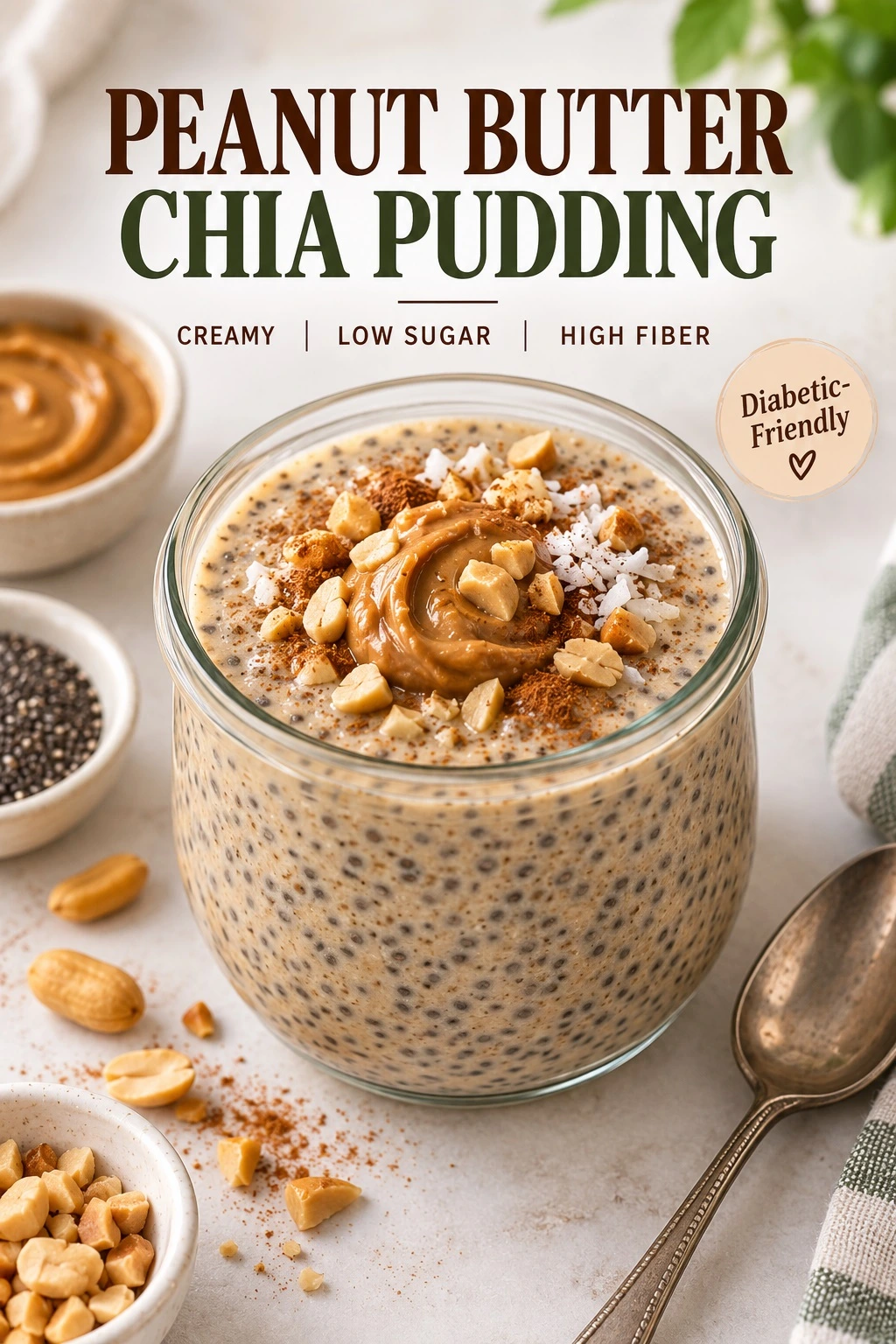
It’s creamy, nutty, and delicious! This Peanut Butter Chia Pudding is an easy to make healthy dessert made with chia seeds, natural peanut butter, unsweetened almond milk, vanilla, and cinnamon. It’s high in fiber, low in sugar, and packed with healthy fats and protein. Perfect as a low sugar dessert.
Ingredients (2 Servings)
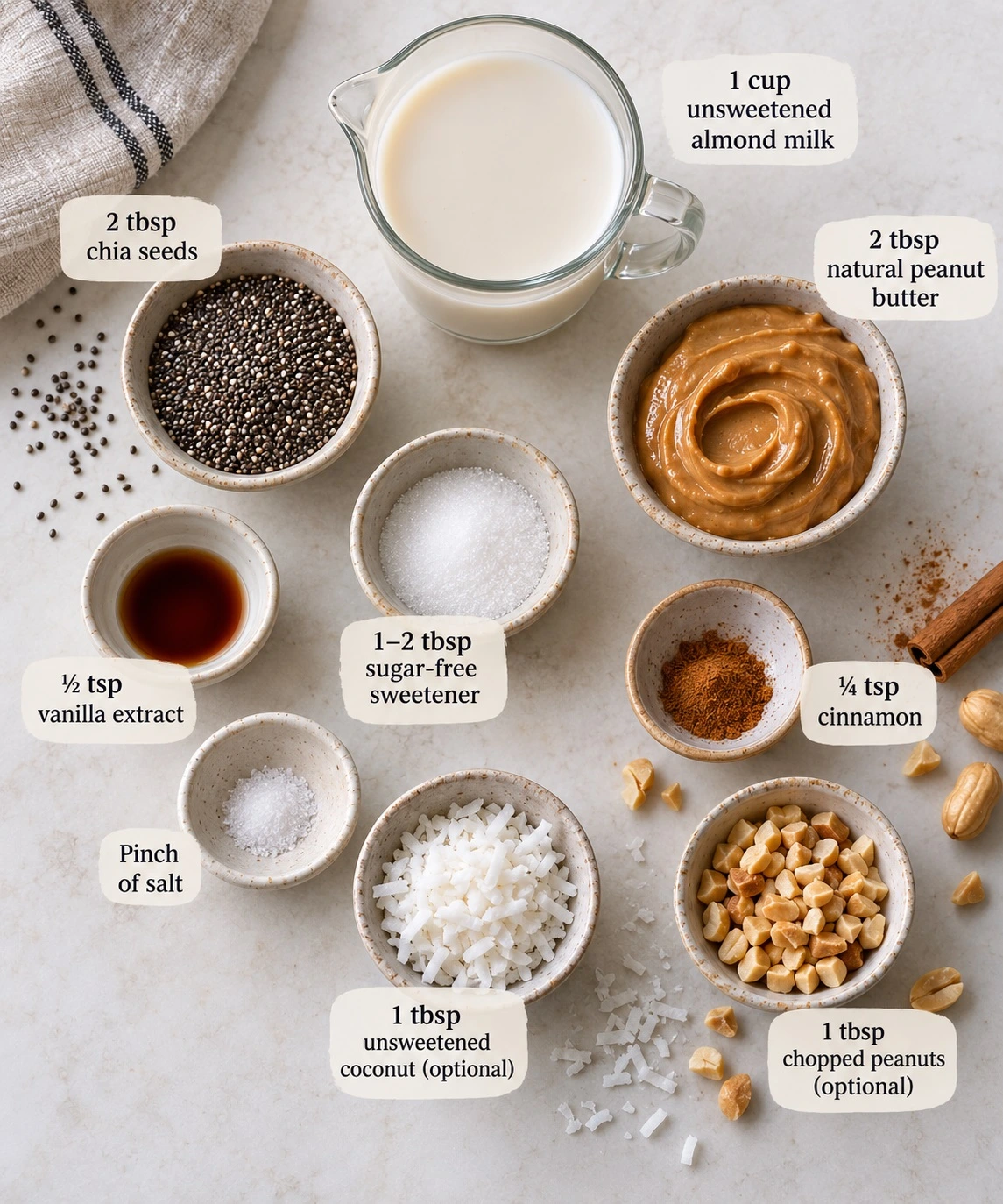
- 2 tbsp chia seeds
- 1 cup unsweetened almond milk
- 2 tbsp natural, unsweetened peanut butter
- ½ tsp vanilla extract
- 1–2 tbsp sugar-free sweetener, such as stevia or monk fruit
- ½ teaspoon cinnamon
- Pinch of Salt
- 1 tbsp unsweetened shredded coconut & chopped peanuts — optional
Step-by-Step Instructions
Step 1: Mixing the ingredients
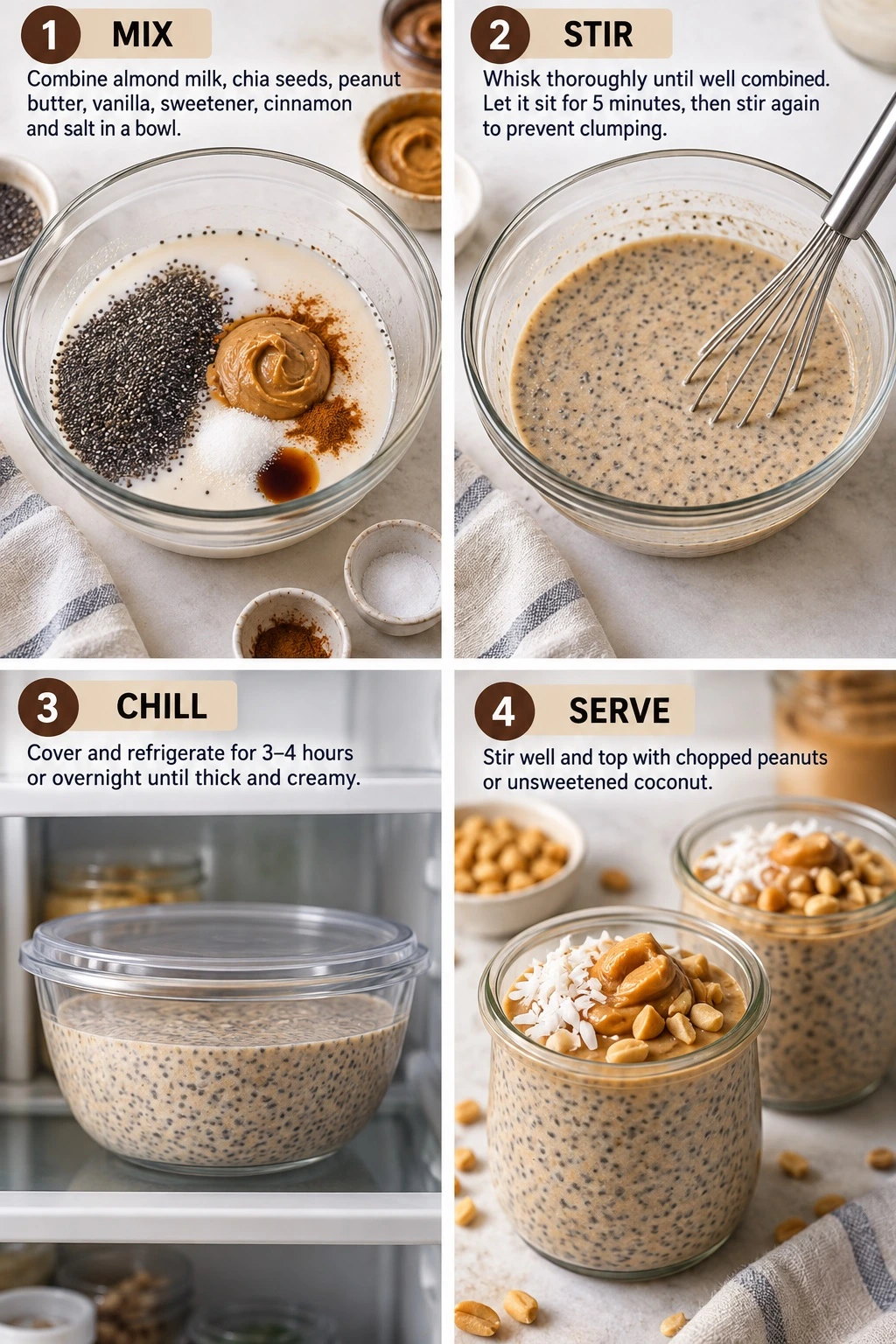
- Mix almond milk, chia seeds, peanut butter, vanilla extract, sweetener, cinnamon, and salt to a bowl or jar.
Step 2: Mix thoroughly
- Whisk until the peanut butter is evenly incorporated and the chia seeds are well distributed. Let it sit for 5 minutes, then stir again to prevent the seeds from clumping.
Step 3: Refrigerate
- Cover and refrigerate for at least 3–4 hours, preferably overnight. The chia seeds will absorb the liquid and create a thick, pudding-like texture.
Step 4: Serve
- Give the pudding a good stir before serving. Divide into two portions and top with a small amount of chopped peanuts or unsweetened coconut if desired.
Nutritional Information
- Calories: 180 kcal
- Protein: 6 – 7 g
- Fiber: 4 – 5 g
- Fats: 14 g
- Carbohydrates: 9 – 10 g
Nutrition will vary depending on the coconut cream, Greek yogurt, and sugar-free sweetener used.
Glycemic Index (GI) Considerations
- Very low added sugar: Using unsweetened peanut butter and a zero/low-calorie sweetener keeps added sugar minimal.
- Healthy fats + protein: Peanut butter adds fat and protein, making the pudding more filling and helping moderate the meal’s overall carbohydrate response.
- High in fiber: Chia seeds provide substantial fiber, which can slow carbohydrate digestion and help reduce the overall glycemic impact.
- Although the recipe is diabetes-friendly, portion size still matters, and individual blood-glucose responses can vary.
Portion Control Tips
- Stick to ½ of the recipe per serving.
- Measure peanut butter rather than adding it by eye—it is nutritious but calorie-dense.
- Choose natural peanut butter with no added sugar.
- Avoid honey, maple syrup, dates, or regular sugar if you’re trying to keep the recipe low in added sugar.
- For additional crunch, use 1 tbsp chopped peanuts for the entire recipe, rather than adding a large handful.


